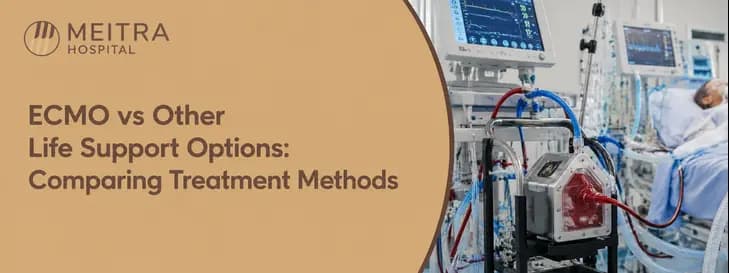

When a doctor tells a family that a patient needs “ECMO,” the first question is almost always the same: isn't that just another word for a ventilator? It isn't, and the difference matters, because the two are used for very different levels of organ failure. Ventilators, intra-aortic balloon pumps (IABP), ventricular assist devices (VAD), and ECMO all fall under the same broad label of mechanical life support, but each one takes over a different amount of work from a failing heart or lungs, for a different length of time, with a different risk profile.
The stakes of getting this choice right are real. Data compiled by the Extracorporeal Life Support Organization shows that patients placed on veno-venous ECMO for severe lung failure survive to hospital discharge roughly 59% of the time, with an average run of about eight days on the machine
That's a meaningful survival chance for patients who, by definition, had already failed conventional ventilator support before ECMO was even considered. This guide breaks down how ECMO differs from every other major life support option, when doctors actually reach for each one, and what the outcome data says.
What Is ECMO and Why Is It Used?
ECMO, or extracorporeal membrane oxygenation, draws blood out of the body through a large cannula, runs it through an artificial membrane that adds oxygen and removes carbon dioxide, then returns it, essentially performing the job of the heart and/or lungs outside the body. It doesn't treat the underlying disease. It buys time: for damaged lungs to rest and heal, for a stunned heart muscle to recover, or for a patient to reach a definitive procedure such as surgery or transplant.
The Three Types of ECMO
- VV (veno-venous): supports the lungs only; heart function stays intact. Used for severe ARDS, pneumonia, or lung failure that hasn't responded to a ventilator.
- VA (veno-arterial): supports both heart and lungs; used in cardiogenic shock, post-cardiotomy failure, or cardiac arrest.
- VAV (veno-arterial-venous): a hybrid configuration used when both heart and lung failure are present at once and the balance between them keeps shifting.
What Makes ECMO Different From Everything Else in the ICU
Unlike a ventilator, which pushes air into lungs that still have to do the actual gas-exchange work, ECMO oxygenates blood entirely outside the body, so severely damaged lungs can rest instead of straining to keep up.
Unlike an IABP or a VAD, which assist a heart that's still pumping, VA-ECMO can substitute for the heart's output almost completely if needed. That's the real distinction: ECMO is what a critical care team reaches for once other supports have already been tried and haven't been enough, not a first-line treatment.
The Other Life Support Options, Compared
Before comparing outcomes, it helps to know what each option is actually doing inside the body.
1. Mechanical Ventilators
Ventilators assist breathing by pushing air into the lungs; they don't replace lung function, and the lungs still have to carry out the actual exchange of oxygen and carbon dioxide. They're the default first step for respiratory failure and are used far more often than ECMO, in routine surgery, sedation, and general critical illness, not only in crisis situations.
2. Intra-Aortic Balloon Pump (IABP)
A balloon catheter placed in the aorta inflates and deflates in sync with the heartbeat, reducing the heart's workload and improving blood flow through the coronary arteries. It's partial support, the heart is still doing most of the pumping itself.
3. Ventricular Assist Devices (VAD)
A VAD is a mechanical pump that helps one or both ventricles push blood, typically used for more sustained heart failure support, sometimes for weeks or months, as a bridge to transplant or, in select cases, as longer-term therapy.
4. CRRT and Organ-Specific Support
Continuous renal replacement therapy (CRRT) supports the kidneys rather than the heart or lungs, and it's frequently run alongside ECMO when a critically ill patient's kidneys are also struggling. It's a useful reminder that “life support” in the ICU is often several systems working at once, not a single device doing everything.
| Life Support Option | What It Actually Supports | Typical Duration | Best Suited For |
|---|---|---|---|
| Mechanical ventilator | Breathing effort, the lungs still do the gas-exchange work | Hours to a few weeks | Respiratory failure, surgery, sedation, early ARDS |
| Intra-aortic balloon pump (IABP) | Partial heart support, the heart still does most of the pumping | Days | Moderate cardiogenic shock; before/after cardiac surgery |
| Ventricular assist device (VAD) | Pumping for one or both ventricles | Weeks to months, sometimes longer | Advanced heart failure; bridge to transplant |
| VA-ECMO | Heart and lungs, fully | Days to roughly two weeks | Cardiogenic shock, cardiac arrest, combined heart-lung failure |
| VV-ECMO | Lungs, fully, heart function stays intact | Days to roughly two weeks (avg. 8 days, ELSO data) | Severe ARDS or lung failure that hasn't responded to a ventilator |


ECMO vs Ventilators Key Differences and Similarities
The table below summarizes how ECMO and mechanical ventilation compare:
| Feature | ECMO | Mechanical Ventilation |
|---|---|---|
| What it supports | Heart and/or lungs (depending on type) | Lungs only |
| How it works | Pumps blood outside body for oxygenation | Pushes air into lungs |
| Invasiveness | Requires large vessel cannulation (groin, chest, neck) | Requires breathing tube in windpipe |
| Cost and complexity | Very high; specialized 24/7 team required | High but more routine in ICUs |
| Duration | Days to weeks (rarely months) | Hours to months depending on condition |
| Risk level | Higher risk of bleeding, clotting, infection | Risk of ventilator-associated pneumonia, tube damage |
| When used | Failure despite maximum ventilator support | First-line for respiratory/airway support |
| Recovery potential | Used when hope of recovery exists | Wide range; many recover quickly |
Both treatments are lifesaving in critical situations, yet they work differently. Ventilation is usually attempted first because it is less invasive and meets most patients' needs. ECMO is reserved for the sickest patients when conventional methods fail. Research from the ELSO (Extracorporeal Life Support Organization) shows that ECMO outcomes depend heavily on underlying diagnosis, age, and how quickly it is initiated.
When Doctors Actually Choose ECMO Over Other Options
Doctors decide on ECMO only after carefully evaluating the cause of organ failure, the patient's overall condition, and whether conventional treatments have been exhausted. The following scenarios are among the most common reasons ECMO is recommended.
1. Severity and Reversibility of the Illness
ECMO is generally reserved for organ failure that's both severe and considered potentially reversible, the team needs a reasonable expectation that the heart or lungs can recover, or that a bridge to another treatment is realistic.
2. Age, Comorbidities, and Multi-Organ Function
Younger patients with fewer comorbidities and preserved kidney and liver function tend to do better on ECMO; this is one of the most consistent findings across outcome studies, and it directly shapes candidacy discussions.
3. Time Window and ICU/ECMO-Team Availability
ECMO cannulation and management require a trained, available team around the clock, this is a genuine limiting factor. Not every hospital runs an ECMO program, and the speed at which a patient can be cannulated after a ventilator or IABP has clearly failed often matters as much as the decision itself.
Recovery and Life After Life Support Therapy
Recovery from life support depends on the underlying cause and how quickly organs respond to treatment. Patients on ventilators often wake up within hours or days once sedation is reduced; many go home within weeks.
Those who receive ECMO typically spend longer in the ICU, sometimes months, because they arrived at a more critical point. Weaning from support is gradual; as organ function improves, ventilator settings are reduced, ECMO flow is lowered, and medications are withdrawn step-by-step.
Psychological and physical rehabilitation is important after prolonged critical illness. Some patients experience post-intensive care syndrome (PICS): ongoing muscle weakness, cognitive problems, anxiety, or depression. Breathing exercises, physical therapy, and psychological support aid recovery. Not all patients survive; mortality depends on age, underlying disease, and how long organs remained severely impaired.
Long-term outcomes for ECMO survivors vary widely. Some return to normal life, while others face lasting physical limitations. Follow-up with critical care specialists, respiratory therapists, and rehabilitation teams optimizes recovery chances. Families should discuss realistic expectations and support services available during the recovery journey.
Also Read: ECMO Treatment Kerala: How It Saves Lives in Critical Emergencies
How Meitra Hospital Approaches ECMO and Critical Care
At Meitra Hospital, ECMO is integrated into the hospital's critical care program, enabling specialists to make timely decisions without transferring patients to another facility. Intensivists, cardiologists, cardiac surgeons, and ECMO specialists work together to assess patients and initiate advanced life support when clinically appropriate.
Key advantages of Meitra's ECMO program include:
- Multidisciplinary critical care team available 24/7 for rapid decision-making.
- Advanced cardiac and intensive care support under one roof, including ventilators, IABP, ECMO, and cardiac surgery.
- Comprehensive ICU monitoring to guide treatment throughout ECMO therapy.
- Transparent treatment planning and cost discussions, helping families prepare for prolonged ICU care.
- Dedicated international patient services, making coordination easier for patients travelling from across India and the Gulf.
This integrated approach helps reduce delays during critical situations while ensuring patients receive continuous, coordinated care throughout their treatment journey.
Conclusion
ECMO, ventilators, IABPs, and VADs aren't competing versions of the same treatment, they sit at different points on a scale of how much of the heart's or lungs' work is being taken over, and for how long.
Ventilators assist breathing; IABPs and VADs assist a heart that's still functioning; ECMO can replace heart and lung function almost entirely when everything else has been tried. The data is genuinely encouraging, close to 6 in 10 patients on VV-ECMO survive to discharge, and even in cardiac arrest, ECMO-facilitated resuscitation can multiply survival odds several times over compared with standard resuscitation alone.
But those numbers only hold up when ECMO is managed by a team that runs it often enough to catch complications early and make the right call on when to wean. That's the detail worth asking about, whichever hospital a family is evaluating.
If you're weighing ECMO against another form of life support for yourself or a family member, the details of your specific case matter more than any general comparison, including this one.
You can chat with our assistant for quick answers to common questions, or reach out to Meitra Hospital's critical care team directly to speak with a specialist about your situation.
Medical Disclaimer This article is for general informational purposes only and is not a substitute for professional medical advice, diagnosis, or treatment. ECMO and other life support decisions are made by qualified critical care specialists based on a patient's specific clinical condition. Always consult a qualified healthcare provider with questions about a medical condition or treatment.