
Endometriosis affects an estimated 10% of women of reproductive age worldwide, around 190 million people, yet it still takes years for most women to get a firm diagnosis, largely because period pain is so often dismissed as normal.
Endometriosis is a condition where tissue similar to the uterine lining grows outside the uterus, often causing chronic pelvic pain and fertility challenges.
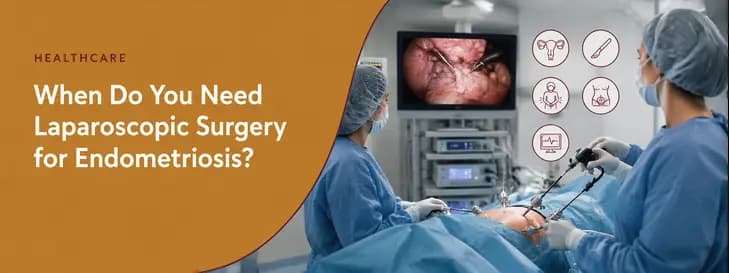
Modern laparoscopic surgery offers a precise, minimally invasive way to diagnose and treat endometriosis, while multiple non-surgical options can help manage symptoms.
This article walks through what laparoscopic surgery for endometriosis actually involves, when it's the right call, what recovery looks like, and what it costs, so that if you're weighing this decision, you're doing it with complete information rather than half of it.
What Is Endometriosis, and Why Is Laparoscopy the Gold Standard?
Endometriosis occurs when cells resembling the uterine lining (endometrium) implant and grow on structures outside the uterus, including the ovaries, fallopian tubes, and peritoneal cavity.
These implants respond to hormonal changes during the menstrual cycle, thickening and breaking down just like normal uterine tissue.
However, because this tissue cannot escape the body naturally, it becomes trapped, leading to inflammation, scarring, and intense pain. The condition is hormone-dependent, meaning estrogen levels play a significant role in its severity and progression.
Endometriosis is classified into four stages based on location, depth, and extent of implants. Stage 1 involves minimal superficial implants, while Stage 4 (severe) includes deep infiltrating disease with extensive scarring.
Laparoscopy remains the gold standard for two reasons. First, it is currently the only way to definitively diagnose endometriosis, imaging can suggest it, but a laparoscopic camera lets a surgeon see and biopsy the lesions directly.
Second, in the same procedure, the surgeon can treat what they find, removing lesions, cysts, or scar tissue , through three or four small incisions instead of one large one, which means less blood loss, a shorter hospital stay, and a faster return to normal life compared with open (laparotomy) surgery
Symptoms That Should Send You to a Gynaecologist; Not the Pharmacy
Many women manage endometriosis symptoms with painkillers for years before seeking a specialist opinion. The symptoms worth flagging early include:
| Symptom | What it often gets mistaken for |
|---|---|
| Severe pain during periods (dysmenorrhoea) | "Normal" period cramps |
| Pain during or after intercourse | Unrelated gynaecological discomfort |
| Chronic pelvic pain outside menstruation | Digestive or urinary issues |
| Heavy or irregular bleeding | Hormonal imbalance |
| Difficulty conceiving | Unexplained infertility |
| Pain during bowel movements or urination, especially around periods | IBS or a urinary tract infection |
Family history matters too, women with a close female relative who has endometriosis are at higher risk, and this is a useful prompt for early evaluation rather than waiting for symptoms to worsen
How Endometriosis Is Diagnosed Before Surgery
A gynaecologist typically works through a sequence before recommending surgery:
-
Pelvic examination to check for tenderness, cysts, or nodules.
-
Transvaginal ultrasound, which can pick up ovarian endometriomas (chocolate cysts) and, in experienced hands, deep infiltrating disease.
-
MRI, used selectively for deep infiltrating endometriosis or complex anatomy before surgical planning.
-
Diagnostic laparoscopy, reserved for cases where imaging is inconclusive but symptoms strongly suggest endometriosis, or combined directly with operative treatment in the same sitting.
Also Read: PCOS Symptoms, Causes and Treatment: A Complete Guide
Laparoscopic Surgery for Endometriosis: How the Procedure Actually Works
Laparoscopic endometriosis surgery isn't a single fixed operation, the approach a surgeon takes depends on where the disease is found, how deep it goes, and whether fertility preservation is a priority. Here's how the main techniques differ.
1. Excision vs. Ablation
There are two surgical approaches to removing endometriosis lesions:
-
Excision cuts out the lesion along with a margin of surrounding tissue, going deeper than the visible surface disease.
-
Ablation burns or vaporises the surface of the lesion, leaving deeper tissue behind.
Excision is generally preferred for moderate-to-severe disease because it removes more of the underlying lesion, which several studies associate with better long-term symptom control, though ablation remains a reasonable option for smaller, superficial lesions and is often faster to perform.
2. Laparoscopic Cystectomy for Ovarian Endometriomas
When endometriosis forms a cyst on the ovary (an endometrioma, sometimes called a "chocolate cyst" for its dark, old-blood contents), the standard operation is a laparoscopic cystectomy, carefully stripping the cyst wall from healthy ovarian tissue while preserving as much normal ovarian reserve as possible.
This balance, thorough removal versus ovarian tissue preservation is one of the more technically demanding parts of endometriosis surgery, and outcomes vary meaningfully with surgeon experience.
3. When Robotic-Assisted Laparoscopy Is Used
For deep infiltrating endometriosis , disease that has grown into structures like the bowel, bladder, or ureters, some centres now use robotic-assisted laparoscopic platforms.
The added dexterity and 3D visualisation can help with precise dissection near these organs, though conventional laparoscopy remains highly effective for the majority of cases and is the more widely available option across Kerala and India.


Non-Surgical and Combination Treatment Options
Surgery isn't always the first or only step. Depending on age, symptom severity, and fertility plans, a gynaecologist may recommend:
- Hormonal therapy (combined pills, progestins, or hormonal IUDs) to suppress the cyclical bleeding that drives inflammation.
- GnRH agonists, used short-term to shrink lesions, sometimes before surgery in more extensive disease.
- Pain management protocols, including NSAIDs and pelvic physiotherapy.
- A combination approach, surgery followed by hormonal maintenance therapy to delay recurrence, particularly for women not actively trying to conceive.
- For women trying to conceive, medical therapy is generally paused, since most hormonal options also suppress ovulation.
What to Eat After Laparoscopic Surgery for Endometriosis
Diet in the days and weeks after surgery isn't just about comfort, it directly affects bowel recovery, bloating, and how quickly inflammation settles. What to eat after laparoscopic surgery for endometriosis typically shifts in phases rather than following one fixed plan:
| Phase | Focus | Foods to prioritise | Foods to limit |
|---|---|---|---|
| Days 1–3 | Easing the gut back into action after anaesthesia | Clear soups, khichdi, boiled rice, herbal teas, plenty of water | Carbonated drinks, fried food, dairy in excess |
| Week 1 | Reducing bloating and constipation (common after abdominal gas insufflation) | High-fibre foods, oats, papaya, cooked vegetables, whole grains; warm fluids | Gas-forming foods like rajma, cabbage, and excess caffeine |
| Weeks 2–4 | Supporting tissue healing and lowering inflammation | Protein-rich foods (eggs, dal, fish, lean meat), leafy greens, berries, turmeric, omega-3-rich foods | Refined sugar, processed and packaged snacks, excess salt |
| Ongoing | Long-term hormonal and inflammatory balance | Anti-inflammatory eating pattern; vegetables, whole grains, healthy fats; limited red meat | Alcohol, ultra-processed foods, excess caffeine |
None of this replaces individual dietary advice from your surgeon or a clinical dietitian, especially if bowel involvement was part of the surgery, those cases often need a more specific, staged reintroduction of food.
Lifestyle and Fertility Considerations
Endometriosis can impact fertility by distorting pelvic anatomy, damaging egg quality, or creating inflammation that interferes with conception. Women who wish to conceive should discuss timing and treatment options with a fertility specialist. Some undergo surgery to improve the pelvic environment before attempting natural pregnancy or assisted reproductive techniques.
Studies in Human Reproduction journals indicate that surgical treatment can improve pregnancy rates in selected patients. Beyond medical treatments, lifestyle modifications support overall wellbeing. Regular gentle exercise such as walking, yoga, or swimming reduces pain and supports mental health.
Stress management techniques and adequate sleep improve immune function. Reducing caffeine, alcohol, and processed foods may help some women. Support groups, both in-person and online, provide valuable community and coping strategies. Planning ahead for family goals and discussing options with your partner and healthcare team ensures informed, personalized decision-making.
Choose Meitra Hospital for Laproscopy Surgery
Meitra Hospital's Centre for Obstetrics and Gynaecology in Kozhikode treats endometriosis through the full spectrum of care, from ultrasound-based diagnosis through operative laparoscopy, hysteroscopy, and, where indicated, robotic-assisted procedures, under gynaecologists who handle both routine and complex cases, including deep infiltrating endometriosis and recurrent disease
Here's why you should choose Meitra Hospital:
- Comprehensive endometriosis care: Evaluation, imaging, laparoscopic surgery, hysteroscopy, and robotic-assisted procedures when clinically appropriate.
- Experienced gynecologists: Expertise in managing routine, complex, recurrent, and deep infiltrating endometriosis.
- Fertility-focused approach: Treatment plans are tailored to preserve fertility whenever possible, with access to reproductive medicine specialists.
- Multidisciplinary care: Collaboration with other specialties ensures seamless management of complex cases without referrals between different hospitals.
- Convenient location: Easily accessible for patients across North Kerala and a preferred destination for many Indian and Gulf-based patients seeking planned treatment.
- International patient support: Dedicated services help Gulf/NRI patients with medical appointments, travel coordination, accommodation assistance, and treatment documentation.
Take the next step toward lasting relief with expert, minimally invasive endometriosis care at Meitra Hospital.
Conclusion
Laparoscopic surgery remains the most effective way to both diagnose and treat endometriosis, offering meaningful relief for the large majority of patients and improved fertility outcomes for many who are trying to conceive, though it comes with a real, if moderate, chance of recurrence that's worth discussing honestly before surgery.
For patients in Kerala, across India, and in the Gulf, the practical questions of surgeon experience, staging-appropriate technique, and continuity of follow-up care matter just as much as the decision to operate at all.
If you're dealing with persistent pelvic pain, painful periods, or unexplained infertility, the most useful next step isn't more research it's a consultation with a gynaecologist who can tell you, specifically, what stage you're likely dealing with and what your options are.
Chat with our health assistant for quick answers, or to discuss your symptoms and treatment options.
Medical Disclaimer: This article is for general informational purposes only and does not constitute medical advice, diagnosis, or treatment. Every case of endometriosis is different, please consult a qualified gynaecologist for a personal evaluation before making any treatment decisions.