
When a second medicine fails to stop seizures, many families simply wait for a third. The evidence says that is the moment to ask a different question. Surgery becomes a realistic and often highly effective option to reduce or eliminate seizures when drugs alone no longer work.
This guide explains what medication-resistant epilepsy is, how doctors confirm it, which tests decide whether surgery is possible, what outcomes look like, and how the process works at Meitra Hospital, Kozhikode.
Quick answer: Medication-resistant epilepsy, also called drug-resistant or refractory epilepsy, means seizures continue despite two appropriately chosen, well-tolerated anti-seizure medicines. At that point further drug changes rarely work, and referral to an epilepsy centre for presurgical evaluation is recommended.
What Is Medication-Resistant Epilepsy?
Medication-resistant epilepsy occurs when anti-seizure drugs fail to achieve seizure control, despite using at least two appropriately chosen medications at therapeutic doses. This diagnosis typically applies after two or more drugs have been tried unsuccessfully. For many patients, living with uncontrolled seizures means facing constant risk of injury, status epilepticus (prolonged seizures), and sudden unexpected nocturnal death in epilepsy, or SUDEP.
Surgery offers a pathway to freedom from seizures when medications plateau. Research shows that approximately 60 to 70 percent of drug-resistant epilepsy patients who undergo appropriate surgery achieve significant seizure reduction or complete seizure freedom. Unlike medications, which manage seizures over time, surgery targets the brain tissue causing abnormal electrical activity, potentially offering a cure rather than lifelong symptom management. This distinction makes surgical evaluation crucial for patients whose quality of life has deteriorated due to uncontrolled seizures.
Is it truly drug resistance? Rule out pseudo-resistance first
Before labelling epilepsy resistant, a specialist checks for look-alikes:
- Wrong diagnosis: non-epileptic events (for example psychogenic episodes, fainting or sleep disorders) can resemble seizures and do not respond to ASMs.
- Wrong drug for the syndrome: some medicines worsen certain generalised epilepsies.
- Dose or adherence gaps: missed doses, brand switching or stopping and restarting.
- Triggers: sleep deprivation, alcohol, fever or interacting medicines.
Correcting these can sometimes bring seizures under control, which is why a careful review with a neurologist comes first.
Why Some Seizures Stop Responding to Medicines
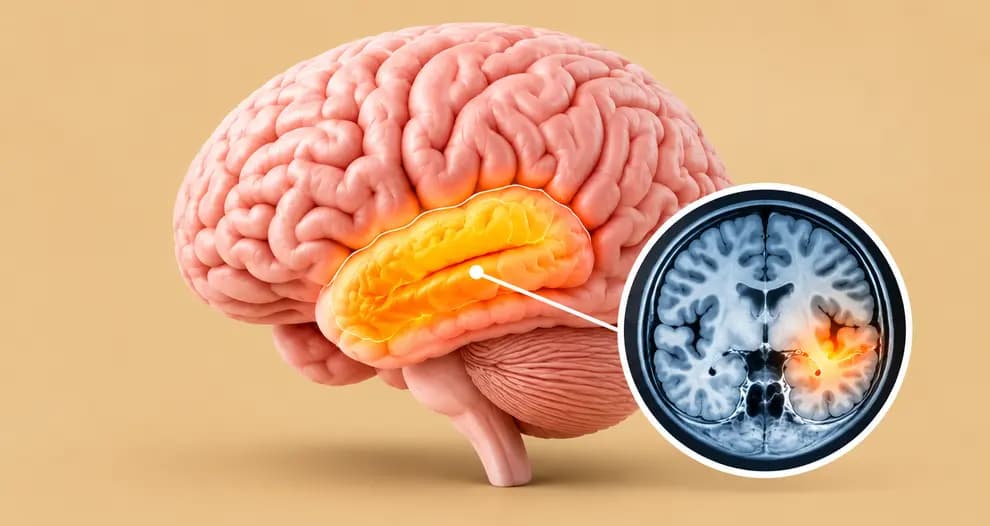
Medicines calm brain-cell firing; they do not remove the tissue that generates seizures. When a structural cause exists, such as hippocampal sclerosis (scarring in the memory centre of the temporal lobe), a focal cortical dysplasia, a tumour, or scarring after stroke, head injury or brain infection, drugs may only partly help.
Signs It Is Time to See an Epilepsy Specialist
Certain seizure patterns, changes in symptoms, or difficulties controlling epilepsy may indicate the need for specialist evaluation. The following signs can help you recognise when to seek an epilepsy specialist.
| Situation | Why it matters |
|---|---|
| Seizures continue after two correctly used medicines | Meets the ILAE definition; a third drug seldom changes the outcome |
| Side effects (drowsiness, slowed thinking, mood change) limit the dose | Control and quality of life are both being sacrificed |
| Injuries, burns, falls or near-drownings during seizures | Safety risk is high while seizures continue |
| MRI shows a lesion (scar, dysplasia, tumour) | Structural causes often make surgery more likely to succeed |
| Seizures limit school, work, driving or marriage prospects | Surgery aims at seizure freedom, which restores these options |
| Seizures are daily or clustered, or started in early childhood | Frequent seizures can affect development and memory |
How Doctors Decide: The Presurgical Evaluation
Surgery works only when the area producing seizures can be found and safely treated. Evaluation is a sequence of tests whose results must agree with each other, a principle called concordance.
-
Detailed history and seizure diary. The first symptom (the aura), what family members witness and the time of day all point to where seizures begin. Bringing phone videos of events is genuinely useful.
-
Video-EEG monitoring. Over several days, brain waves and video are recorded together, often with medicines reduced under supervision, so that typical seizures are captured. This test also exposes non-epileptic events.
-
Epilepsy-protocol MRI. Thin-slice sequences designed to reveal subtle abnormalities that routine MRI can miss.
-
Functional imaging (PET, SPECT). Helpful when MRI looks normal, because they show areas of abnormal metabolism or blood flow.
-
Neuropsychological testing. Measures memory, language and attention before surgery so risks can be predicted and compared afterwards.
-
Mapping of language and memory (fMRI or other methods). Used when the suspected area lies near speech or memory regions.
-
Stereo-EEG (SEEG). In selected cases, thin electrodes are placed inside the brain through small openings to pinpoint the source when non-invasive tests disagree.
-
Multidisciplinary epilepsy conference. Neurologists, neurosurgeons, radiologists, neuropsychologists and nurses review all results together and recommend surgery, another therapy, or no surgery.


Surgery and Other Options Compared
Several epilepsy surgical approaches target drug-resistant epilepsy, and your neurologist selects the best option based on seizure type, location, and anatomy.
Resective surgery is the most common approach, involving removal of the brain tissue generating seizures. The surgeon removes the seizure focus entirely, often including surrounding tissue if needed. Success rates are highest when a clear structural lesion exists; seizure-free rates range from 70 to 80 percent depending on location and pathology.
Temporal lobe resection addresses seizures originating in the temporal lobe, the most common surgical target. This procedure has well-documented safety and efficacy, with approximately 70 percent of patients becoming seizure-free.
Neuromodulation offers an alternative when resection is not feasible or high-risk. Vagus nerve stimulation (VNS) involves implanting a device that sends electrical pulses along the vagus nerve, reducing seizure frequency by 30 to 40 percent without removing brain tissue.
Corpus callosotomy disconnects the two brain hemispheres, preventing seizure spread. This is primarily used for generalized seizures that cause falls or injuries. It typically reduces seizure severity rather than eliminating them entirely.
Hemispherectomy removes or disconnects an entire brain hemisphere, reserved for severe cases where one hemisphere is non-functional. Despite its dramatic nature, outcomes can be remarkable in appropriately selected patients.
When Surgery Is Not the Best Option
Surgery is generally less suitable when seizures begin in several areas, in both hemispheres, or in brain regions that control speech or movement, and when tests do not agree. These patients may still gain from neuromodulation, diet therapy, newer medicines and seizure-safety planning. A good epilepsy team will say “not a candidate” plainly and explain the alternatives.
Epilepsy Care at Meitra Hospital, Kozhikode
Meitra Hospital’s Centre for Neurosciences covers neurology, brain and spine surgery, interventional neurology and neurorehabilitation. Its Meitra Advanced Epilepsy Centre is described by the hospital as a Level 4 clinic dedicated to epilepsy care, supporting specialist evaluation and treatment planning for patients with difficult-to-control seizures.
Neurology and Neurosurgical Expertise
Meitra’s epilepsy care involves neurological assessment and neurosurgical expertise to help determine whether a patient may benefit from epilepsy surgery or other treatment options.
-
Dr. Sachin Sureshbabu, HOD and Senior Consultant-Neurology, Director-Research and Innovations: Leads the neurology department and brings specialist experience in evaluating and managing complex neurological conditions.
-
Dr. Nilesh Shaligram Kurwale, Senior Consultant-Neurosurgery: Holds an MCh in Neurosurgery from AIIMS, New Delhi, a DBT Fellowship in Epilepsy and Functional Neurosurgery, and advanced epilepsy-surgery training at Jefferson University Hospitals, Philadelphia. His published research includes studies on the relationship between ictal SPECT and PET findings in predicting long-term epilepsy-surgery outcomes, as well as intraoperative MRI in epilepsy surgery.
What the Epilepsy Evaluation Involves
The care pathway begins with confirming the diagnosis, reviewing seizure patterns and assessing previous anti-seizure medicines. Depending on the patient's condition, the epilepsy team may recommend video-EEG monitoring, specialised MRI, PET/SPECT imaging and neuropsychological testing. The availability of specific investigations, including stereo-EEG (SEEG), should be confirmed with Meitra.
When surgery is being considered, multidisciplinary review helps determine the seizure's origin, the potential benefits and risks of an operation, and whether another treatment approach is more appropriate. Meitra also offers neurorehabilitation services and has a Deep Brain Stimulation programme for movement disorders.
Hospital Infrastructure and Appointments
Meitra hospital is a 450,000 sq. ft. quaternary-care hospital with 220 patient rooms and suites, eight operation theatres and 52 intensive care beds. It holds NABH and Green OT accreditation.
To explore epilepsy treatment options, use the Contact Us option on Meitra Hospital’s website to request a consultation and ask about sharing previous EEG reports, brain scans and medication records. You can also use the Chat with our Medical Assistant option to clarify your next steps.
Conclusion
Medication-resistant epilepsy is a recognised, specific diagnosis, not a personal failure of treatment. When two appropriate medicines have not stopped seizures, the likelihood of control with more drugs falls sharply, while carefully selected patients have a real chance of seizure freedom with surgery. The key is a thorough presurgical evaluation by a team that can say yes, no or “consider this instead”. If seizures are continuing, bring your records, a seizure diary and phone videos to an epilepsy specialist and ask the question directly: could surgery be an option for me?
Medical disclaimer: This article is for general information and does not replace professional medical advice, diagnosis or treatment. Never start, stop or change medicines without consulting your doctor. In an emergency, such as a seizure lasting more than five minutes, repeated seizures or injury, seek immediate medical help.