
Kidney stones can cause sudden, intense pain and disrupt your daily life. If you've been diagnosed with a kidney stone in Calicut or surrounding areas, you may wonder whether surgery is your only option. The good news is that modern urology now offers several minimally invasive treatments that remove stones safely, with less tissue damage, minimal scarring, and faster recovery compared to traditional open surgery.
This article walks through exactly what those options are, how doctors in Calicut actually choose between them, what recovery really feels like day by day, and when it's worth travelling to a specialist nephro-urology centre rather than a general hospital.
What are Kidney Stones and When Does a Kidney Stone Actually Need Treatment?
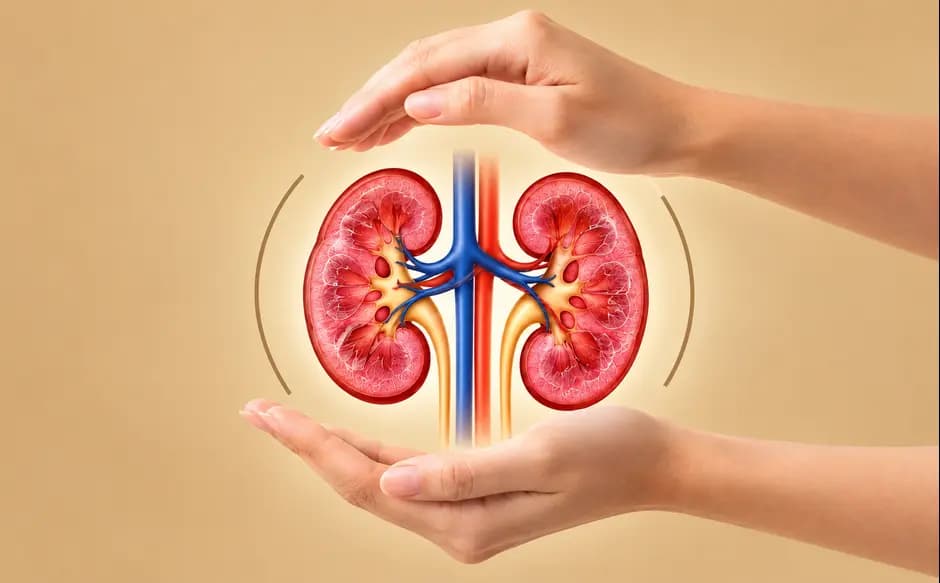
Kidney stones form when minerals and salts crystallize inside your kidneys, creating hard deposits that can block urine flow. These deposits develop slowly, often without obvious symptoms until they become large enough to cause pain.
Not every stone needs an intervention. Stones under about 4–5 mm often pass on their own with hydration and medical expulsive therapy (alpha-blockers that relax the ureter). The size threshold most urologists use as a rough guide:
- Under 5 mm: High chance of natural passage; usually monitored, not operated on. - 5–10 mm: Passage possible but less likely; treatment is often recommended if pain persists or the stone isn't moving. - Above 10 mm, or a stone that's blocking urine flow, causing infection, or sitting in a spot where it won't move, treatment is usually necessary, and delaying it risks silent kidney damage.
The symptoms that should send you to a urologist immediately rather than waiting it out: fever with flank pain (a sign infection is trapped behind the stone, which can become sepsis within hours), inability to pass urine, or pain that isn't controlled by standard painkillers. A stone combined with fever is a same-day emergency, not a "see how it goes" situation.
What Are Minimally Invasive Treatment Options
Minimally invasive treatments use specialized equipment and small incisions or natural body openings to access and remove kidney stones. Unlike traditional open surgery, which requires a large cut in the abdomen or back, these newer procedures preserve surrounding tissue, reduce bleeding, and minimize post-operative pain. Most minimally invasive procedures are performed under general or local anesthesia and allow patients to return home the same day or after a brief overnight stay.
There are three procedures that account for the overwhelming majority of kidney stone treatment today. None of them involve a large incision.
1. ESWL (Extracorporeal Shockwave Lithotripsy)
ESWL uses focused shockwaves generated outside the body to fragment the stone into pieces small enough to pass in urine naturally. It's entirely non-invasive, no scope, no incision, done as a day-care procedure, usually without general anaesthesia.
It works best for stones under roughly 10–15 mm sitting in the kidney or upper ureter, and it works less reliably on very hard stones (like calcium oxalate monohydrate or cystine stones) or stones in awkward locations like the lower pole of the kidney, where gravity works against fragment clearance.
2. RIRS: Retrograde Intrarenal Surgery (Ureteroscopy with Laser Lithotripsy)
RIRS uses a thin, flexible scope passed through the urethra and bladder, up the ureter, and into the kidney, no cuts at all. Once the scope reaches the stone, a laser fibre (typically Holmium or Thulium) fragments it, and the pieces are either dusted into fine particles or retrieved with a tiny basket.
Because there's no external wound, patients typically go home within a day, and the discomfort is closer to what you'd feel after a minor endoscopic procedure than after surgery. RIRS has become the preferred option for stones up to roughly 2 cm, particularly when the stone sits in a location ESWL struggles to clear.
3. PCNL / Mini-PCNL: Percutaneous Nephrolithotomy
For larger stones, generally above 2 cm, staghorn stones that fill much of the kidney's collecting system, or cases where RIRS/ESWL have already failed, PCNL is the workhorse. It involves a single small puncture (roughly 1 cm, smaller still with mini-PCNL instruments) through the back directly into the kidney, through which the stone is fragmented and cleared, often in one sitting.
It's more invasive than RIRS by definition, but for large stone burdens it clears the kidney faster and more completely, which matters, because leftover fragments are one of the biggest drivers of stone recurrence.
| Procedure | Method | Best For | Recovery |
|---|---|---|---|
| Extracorporeal Shock Wave Lithotripsy (ESWL) | Sound waves break stones into small pieces | Stones under 20 mm, kidney or upper ureter | 1-2 weeks |
| Ureteroscopy with Laser | Laser fragments stones inside the ureter | Stones in ureter, lower kidney stones | 3-5 days |
| Percutaneous Nephrolithotomy (PCNL) | Small scope removes large stones directly | Large stones over 20 mm, complex cases | 2-3 weeks |
| Flexible Ureteroscopy | Thin flexible scope reaches all kidney areas | Stones in difficult positions, multiple stones | 1-2 weeks |
Each technique minimizes tissue trauma while effectively clearing stone obstruction. According to research published in the Journal of Endourology, laser-assisted ureteroscopy achieves stone-free rates exceeding 90 percent with minimal complications.
How Doctors Actually Decide Between RIRS, PCNL and ESWL
This is where a lot of patient-facing content oversimplifies. The truth is that no single procedure is universally "better," the right choice depends on a combination of factors a urologist weighs together:
- Stone size and burden, the single biggest factor, as the table above shows
- Stone location, a stone in the lower pole of the kidney clears less efficiently with ESWL because gravity works against it; RIRS or PCNL often perform better here regardless of size
- Stone composition, uric acid stones respond differently to shockwaves than calcium oxalate or cystine stones
- Kidney anatomy, a narrow or scarred ureter can make RIRS technically harder, sometimes requiring a stent placed in advance to allow the ureter to dilate before a second-stage procedure
- Kidney function and patient fitness, patients with a solitary kidney, reduced kidney function, or bleeding-risk conditions are managed with extra caution
- Prior treatment history, a stone that has already resisted one ESWL session is often better served by RIRS or PCNL rather than a repeat attempt.


Recovery and What to Expect After Treatment
Recovery timelines vary based on which minimally invasive procedure your urologist performs. After ESWL, expect mild discomfort and slight bleeding in urine for a few days as stone fragments pass. Drink plenty of water to help flush fragments through your urinary system. Some patients see bruising over the treatment area, which fades within 2 weeks. Light exercise like walking is encouraged; avoid strenuous activity and heavy lifting for 3 to 4 weeks.
Following laser ureteroscopy, a small stent may remain in your ureter for a few days to prevent swelling. This stent is removed painlessly during a brief follow-up visit. You may notice discomfort during urination and slight blood-stained urine for 1 to 2 weeks. Your doctor provides antibiotics to prevent infection and instructions on when to resume normal activities. Most patients work from home for a few days but return to office or regular duties within a week. Pain typically resolves within 2 to 3 days with oral medications. All minimally invasive procedures require follow-up imaging to confirm complete stone removal and ensure normal kidney drainage.
Why Do Patients Choose Meitra Hospital for Kidney Stone Removal in Calicut?
Choosing where to undergo kidney stone treatment isn't just about finding a hospital that offers RIRS or PCNL, it's about finding a centre that can manage the entire journey if the situation becomes more complex than expected.
While many kidney stones can be treated with minimally invasive techniques, every case is different. Stone size, location, anatomy, kidney function, and previous stone episodes all influence the treatment plan. That's why infrastructure and multidisciplinary support often matter as much as the procedure itself.
What Sets Meitra Hospital's Approach Apart?
At Meitra Hospital's Centre of Excellence for Nephro-Urosciences & Kidney Transplantation, kidney stone care is delivered through close collaboration between urologists, nephrologists, radiologists, anaesthesiologists, and critical care specialists. This integrated model helps ensure that patients receive coordinated care before, during, and after treatment.
Some of the strengths of this approach include:
- Comprehensive minimally invasive stone treatments, including RIRS, PCNL, laser lithotripsy, and ureteroscopy.
- Advanced surgical infrastructure designed to support complex stone procedures with modern endourology equipment.
- Integrated nephrology and urology expertise, particularly valuable for patients with recurrent stones, reduced kidney function, or underlying kidney disease.
- Access to intensive care, dialysis, and kidney transplant services within the same hospital if additional support is needed.
- Personalised treatment planning, where the choice between observation, RIRS, PCNL, or another procedure is based on clinical findings rather than a one-size-fits-all approach.
For many patients travelling from outside the region, the advantage lies in having:
- A single hospital for consultation, imaging, surgery, and follow-up.
- Coordinated care from multiple specialists when kidney stones are associated with other renal conditions.
- Experienced teams familiar with managing both routine and complex stone disease.
- Streamlined support for domestic and international patients throughout their treatment journey.
Not every kidney stone requires treatment at a tertiary care centre. However, for patients with recurrent stones, larger stones, anatomical challenges, infections, or reduced kidney function, access to multidisciplinary expertise can make treatment planning more efficient and reduce the need for referrals between multiple hospitals.
If you've been advised to undergo kidney stone removal or you're exploring minimally invasive options such as RIRS, PCNL, or laser lithotripsy, speaking with a specialist can help you understand which treatment is most appropriate for your specific condition.
Also Read: A Complete Patient’s Guide to Kidney Transplant Hospitals in Kerala
Conclusion
Kidney stones are common enough that most families will deal with one eventually, but "common" doesn't mean "one-size-fits-all." The right minimally invasive treatment depends on stone size, location, and composition far more than on which procedure sounds least invasive on paper, and the honest trade-offs between ESWL, RIRS, and PCNL are worth understanding before you sit down with a urologist, not after.
If there's one thing worth taking away, it's that a stone-free result on discharge day is only half the job, follow-up and prevention are what actually keep you out of the ER a second time.
Whether you're in Kozhikode or travelling in from further afield, the questions to ask any hospital are the same: which procedure fits your specific stone, what's the realistic recovery timeline, and what happens if the plan needs to change mid-procedure.
Have questions about your specific case? Chat with our care assistant now to understand which treatment path may suit your stone size and symptoms or book a consultation with a specialist urologist in Calicut.
Medical Disclaimer: This article is for general informational purposes only and is not a substitute for professional medical advice, diagnosis, or treatment. Kidney stone treatment decisions should always be made in consultation with a qualified urologist based on individual imaging, medical history, and kidney function. If you are experiencing severe pain, fever, or inability to urinate, seek emergency medical care immediately.