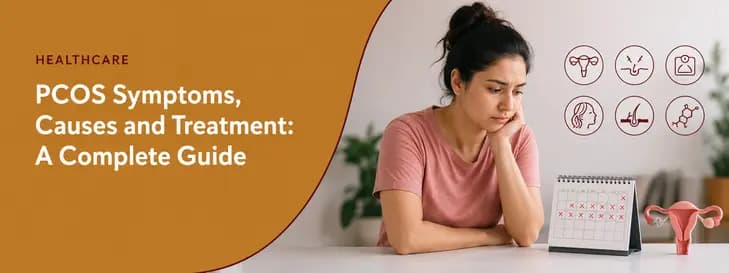

If your periods have gone from "predictable" to "anyone's guess," if new acne is showing up in your late twenties, or if a routine ultrasound mentioned "polycystic ovaries" and left you Googling at midnight, you are far from alone.
Polycystic ovary syndrome, or PCOS, is one of the most common hormonal disorders affecting women of reproductive age worldwide. If you've been experiencing irregular periods, weight gain, or difficulty conceiving, PCOS might be part of your story. Understanding what PCOS is, how it develops, and what treatment options are available can help you take control of your health and plan for your future.
That is why, this guide breaks down what PCOS actually is, what causes it, how doctors diagnose it, and which treatments have real clinical evidence behind them, so you can walk into a gynecology consultation with clarity instead of anxiety.
What Is Polycystic Ovary Syndrome
Polycystic ovary syndrome is a condition in which a woman's ovaries produce higher-than-normal amounts of male hormones called androgens. This hormonal imbalance prevents the ovaries from releasing eggs regularly, leading to irregular or missed periods. The term "polycystic" refers to the appearance of many small cysts on the ovaries, though not all women with PCOS have visible cysts on imaging.
PCSO affects between 10% and 13% of women globally, making it one of the most prevalent hormonal disorders among women of reproductive age.
The exact cause remains unclear, but research suggests a combination of genetic and environmental factors play a role. Insulin resistance is thought to be a significant contributor, as many women with PCOS have difficulty processing insulin efficiently. This leads the body to produce more insulin, which stimulates the ovaries to produce excess androgens, disrupting normal ovulation.
Common Symptoms of PCOS
PCOS symptoms vary widely among women, and no two cases are exactly alike. The most recognizable sign is irregular menstrual cycles, which may come less frequently than every 35 days or may be absent altogether for months. Many women report heavier-than-normal bleeding during their periods when menstruation does occur.
PCOS rarely announces itself with one clear sign. It usually shows up as a cluster of smaller changes that build over months or years.
| Category | Common Symptoms |
|---|---|
| Menstrual | Irregular, infrequent, prolonged, or absent periods; heavy bleeding when periods do occur |
| Skin & Hair | Acne (jawline/chin pattern), excess facial/body hair (hirsutism), thinning scalp hair, skin darkening at neck/underarms (acanthosis nigricans) |
| Metabolic | Weight gain (especially around the abdomen), difficulty losing weight, sugar cravings, fatigue |
| Fertility | Difficulty conceiving due to irregular or absent ovulation |
| Emotional | Mood swings, anxiety, low mood, often under-discussed but clinically significant |
Early warning signs teens often miss: Persistent acne past the usual teenage years, periods that never settle into a regular rhythm even 2–3 years after menarche, and unexplained weight gain are frequently brushed off as "normal puberty." In our clinical experience, the earlier these patterns are flagged to a gynecologist, the easier PCOS is to manage before metabolic complications set in.
Symptoms that show up later: In the late 30s and perimenopausal years, PCOS symptoms can shift, cycles may partially regularize, but metabolic risks (like insulin resistance and cholesterol changes) often become more prominent than the reproductive symptoms that dominated earlier.
What Causes PCOS? Understanding the Root Drivers
There is no single cause of PCOS, it's a combination of genetic predisposition and metabolic dysfunction, often triggered or worsened by lifestyle and environmental factors.
1. Genetics and family history. If your mother, sister, or aunt has PCOS, your own risk is meaningfully higher. Multiple gene variants linked to insulin signalling and androgen production have been associated with PCOS, though no single "PCOS gene" exists.
2. Insulin resistance, the metabolic core. This is arguably the most important, and most under-explained, piece of the puzzle. When cells become resistant to insulin, the body compensates by producing more of it. Excess insulin pushes the ovaries to produce more androgens, which disrupts ovulation, creating the classic PCOS cycle of irregular periods, acne, and weight gain feeding into each other.
3. Inflammation, weight, and environmental triggers. Low-grade chronic inflammation is now recognised as a contributing factor. Weight gain can worsen insulin resistance, but it's important to note PCOS also occurs in lean women, weight is a contributing factor, not a prerequisite.
How Is PCOS Diagnosed? The Rotterdam Criteria Explained
A proper PCOS diagnosis is a process of ruling in and ruling out, not just an ultrasound report.
| Test | What It Checks |
|---|---|
| Pelvic ultrasound | Ovarian volume and follicle count/pattern |
| LH/FSH ratio | Hormonal imbalance pattern common in PCOS |
| Free testosterone / DHEAS | Androgen (male hormone) levels |
| TSH | Rules out thyroid disorders mimicking PCOS symptoms |
| Prolactin | Rules out other causes of irregular cycles |
| Oral Glucose Tolerance Test (OGTT) | Screens for insulin resistance / prediabetes |
| Lipid profile | Checks cholesterol, since dyslipidemia is common in PCOS |
Because conditions like thyroid disorders and hyperprolactinemia can mimic PCOS symptoms, a thorough diagnostic workup, not a scan alone, is essential before starting any treatment.
How PCOS Affects Fertility
One of the most challenging aspects of PCOS for many women is its impact on fertility. The condition disrupts the normal hormonal signaling required for ovulation, meaning the ovaries may not release an egg each month. Without regular ovulation, conception becomes difficult or impossible without intervention. Studies show that women with PCOS take longer to conceive and may require assisted reproductive technologies to achieve pregnancy.
Beyond conception, PCOS pregnancy carries additional considerations. Women with PCOS have higher rates of gestational diabetes, preeclampsia, and premature birth. Proper management before and during pregnancy is essential to reduce these risks. The good news is that with appropriate treatment and lifestyle modifications, many women with PCOS successfully conceive and carry pregnancies to term. Fertility specialists and endocrinologists can work together to create personalized treatment plans that address hormonal imbalances and improve ovulation.


PCOS Treatment: What Actually Works
There is no single "cure" for PCOS, but it is highly manageable with the right combination of approaches, tailored to whether the priority is symptom control, metabolic health, or fertility.
1. Lifestyle-first management.
For most women, sustainable changes to diet, physical activity, and sleep are the foundation, even a modest reduction in body weight has been shown to improve ovulation and insulin sensitivity in many women with PCOS.
2. Medical management.
Depending on symptoms and goals, doctors may prescribe:
- Combined hormonal contraceptives to regulate cycles and reduce androgen-related symptoms like acne and hirsutism
- Metformin to improve insulin sensitivity, particularly when insulin resistance is confirmed
- Anti-androgen medications for persistent hirsutism or hair thinning, under close medical supervision
3. When fertility treatment is needed.
For women trying to conceive, letrozole is now the first-line ovulation-induction medication in most PCOS cases, with clomiphene citrate as an alternative. If oral medication doesn't achieve ovulation or pregnancy, options escalate to IUI (intrauterine insemination) and, where needed, IVF.
4. Laparoscopic ovarian drilling.
Surgery is not a first-line treatment and is reserved for specific cases where medication hasn't induced ovulation. It's a minimally invasive procedure, but the decision should always follow a detailed fertility workup, not be treated as a shortcut.
When to Seek Medical Help
If you experience irregular periods, unexplained weight gain, difficulty conceiving, or excess hair growth, scheduling an appointment with your gynecologist or primary care physician is important. Early diagnosis and treatment can prevent complications and help you achieve your health and family planning goals.
Women with PCOS should have regular health monitoring, including annual check-ups to assess metabolic health, blood pressure, and cholesterol levels.
Seek immediate medical attention if you experience severe pelvic pain, heavy vaginal bleeding, or other acute symptoms. Additionally, if you've been diagnosed with PCOS and are planning pregnancy, consulting with a fertility specialist or reproductive endocrinologist ensures you receive optimal care.
Mental health support is also valuable, as many women with PCOS experience anxiety or depression related to their condition and fertility challenges. A comprehensive approach involving multiple healthcare providers offers the best chance for managing PCOS effectively and improving quality of life.
Why Women Across Kerala and the Gulf Choose Meitra Hospital for PCOS Care
PCOS is best managed through coordinated care rather than multiple specialist visits. At Meitra Hospital, Kozhikode, the Centre for Excellence in Obstetrics and Gynaecology offers comprehensive evaluation and treatment under one roof.
Patients can undergo hormonal and metabolic testing, ultrasound assessment, and receive a personalised treatment plan in a streamlined care pathway. If fertility is a concern, the same team provides ovulation induction, IUI/IVF services, and minimally invasive laparoscopic or hysteroscopic procedures when clinically indicated. This continuity helps reduce repeated tests and ensures consistent long-term management.
Along with medical care, these lifestyle measures can improve treatment outcomes:
- Choose low-glycemic foods such as whole grains, legumes, and vegetables.
- Include protein and fibre in every meal to support blood sugar control.
- Combine strength training with regular cardio exercise.
- Prioritise 7–9 hours of quality sleep.
- Manage stress through mindfulness, yoga, or other relaxation techniques.
These changes complement medical treatment and help improve hormonal and metabolic health over time.
Have questions specific to your symptoms or test results? Chat with our care assistant for guidance on next steps.
Medical Disclaimer: This article is for informational purposes only and is not a substitute for professional medical advice, diagnosis, or treatment. Always consult a qualified gynecologist or endocrinologist regarding any questions about your health or a medical condition.